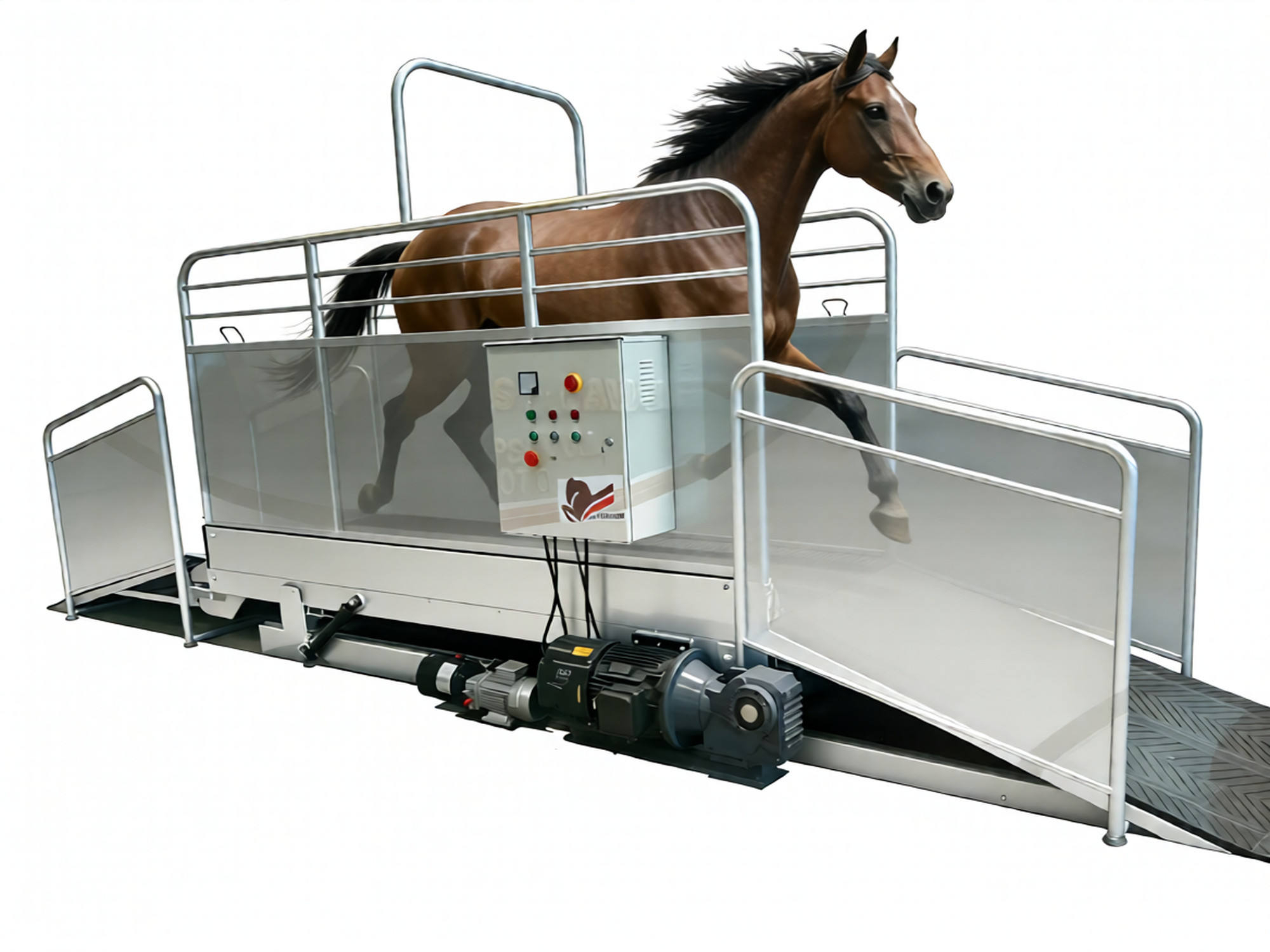
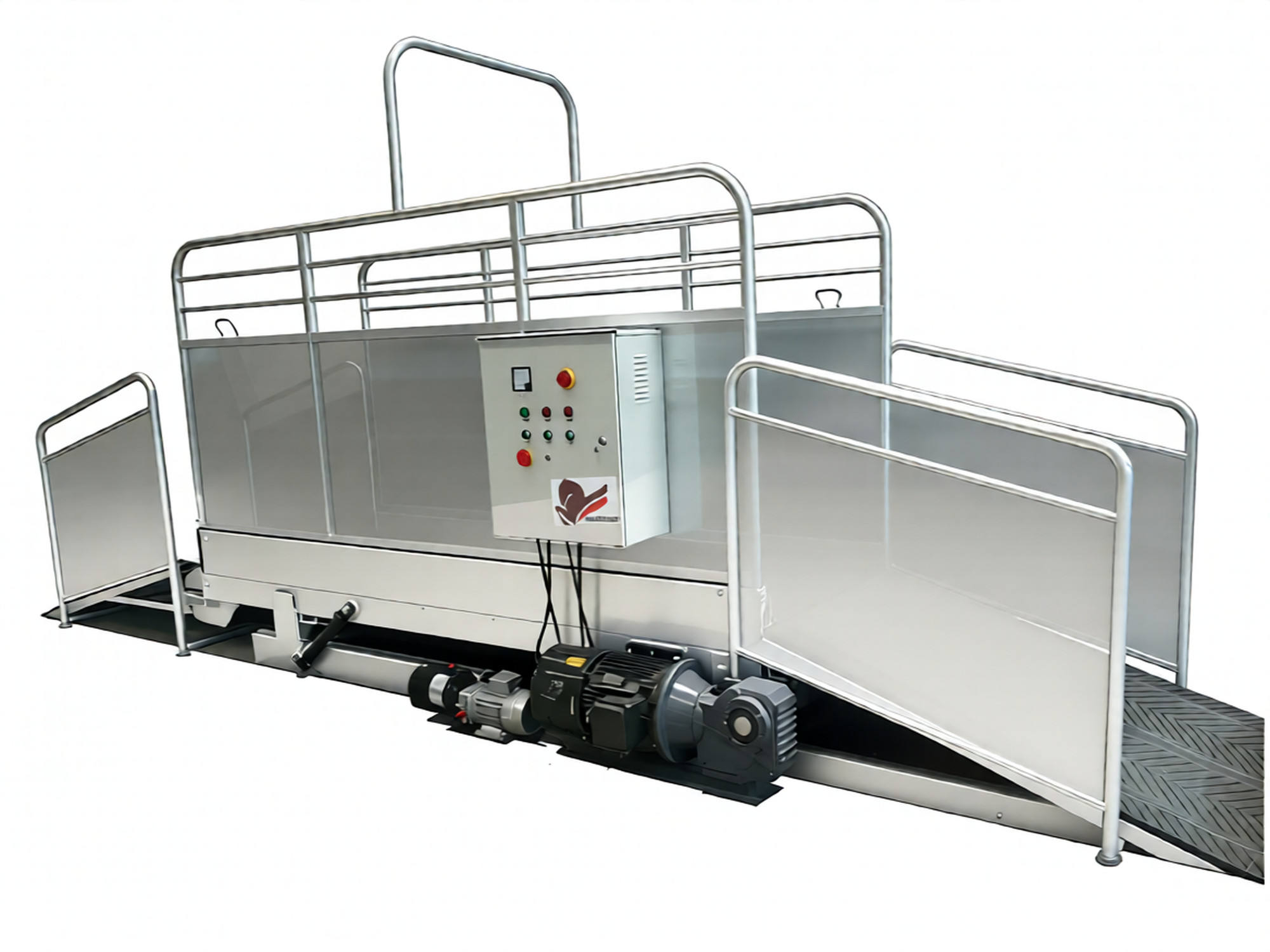
Controlled Loading and Early Mobilisation: The precise control of speed and duration allows for safe, progressive loading of injured limbs. This can lead to better outcomes for soft tissue injuries like tendon or suspensory issues by promoting correct conditioning.
Reduced Concussion and Stress: By avoiding uneven terrain and a rider’s weight, treadmills minimise concussive forces on joints, tendons, and ligaments.
Targeted Muscle Rebuilding: Specific muscle groups, especially in the back and hindquarters can be targeted and strengthened without placing excessive strain on other areas.
Monitoring and Assessment: The controlled environment facilitates close monitoring of the horse’s gait, heart rate and overall recovery. This provides valuable data to veterinarians and therapists.
Consistent Surface: The firm, flat surface of a land treadmill is beneficial for conditions requiring symmetrical foot loading and straight-line exercise, such as post-joint medication recovery or certain hindlimb injuries.
Alternative Exercise During Lay-up: For restricted turnout, treadmills offer a vital way to maintain cardiovascular function and muscle tone, minimising loss of condition during recovery.
Enhanced Confidence and Mental Well-Being: The controlled environment can help improve a horse’s confidence in movement and reduce anxiety during training.
At Equine treadmill, the well-being and safety of your horses are paramount. Our treadmills are designed with clear, simple use in mind, offering a safe environment for your horses. each treadmill is a testament to our commitment to providing a reliable and secure experience for both horses
Explore our range of innovative treadmills designed to enhance the health and performance of your horses.
Get the answer you need below. If you can’t find them, reach out to us.
Your horse will be given a program tailored to their needs /requirements. The water treadmill has benefits for muscle strengthening and low impact exercise. This can improve a range of motion and flexibility, while the cold-water spa boosts circulation, reduces inflammation, swelling and enhances healing. The salt room has benefits for any skin conditions as well as the respiratory conditions.
To properly understand how the low temperature hydrotherapy of Equine Spas works we need to review how the body reacts to the trauma of strains, cuts and bruises. When soft tissue is injured through a cut, tear or by concussive trauma the body releases enzymes and proteins causing the blood vessel walls in that vicinity to dilate and become more porous.
Lymphocytes are directed to the site of the trauma passing through the porous membranes and entering the injured tissues to begin fighting the infection. The extra fluids, carrying the oxygen and proteins for tissue repair, pool around the injured area causing edema or swelling which helps to immobilise the injury. Tissue damage also triggers the secretion of hormones which cause much of the pain the horse feels in order to prevent overuse of the affected limb. Additionally, the increased blood flow to the site of the injury results in a rise in temperature in the tissues in that vicinity.
The three main symptoms of inflammation, namely pain, heat, and swelling, occur in varying degrees depending on the site, nature, and severity of the injury. The downside of inflammation is that it may rage out of control and hinder the healing process resulting in secondary tissue damage or hypoxic injury, which can compound the problem. In addition, blood vessels in the area are put under increasing pressure by the fluid build-up, thereby slowing down the flow of blood and lymphatic fluid.
The safest way to break the destructive cycle of secondary cell injury and excess swelling is to use the horse’s circulatory system to sweep away excess fluids that have collected in the tissues.
While anti-inflammatory agents such as bute reduce swelling and heat, they may also mask pain confusing the diagnostic picture. Also, the use of corticosteroids to control heat and inflammation may have the disadvantage of shutting down the whole healing process.
The application of cold triggers three basic reactions. Firstly, at a cellular level, the metabolic response of the cells is reduced, so the cells need less oxygen to function and thereby suffer less hypoxic injury. Secondly, the permeability of the blood vessel walls is decreased, thus reducing the amount of fluid that accumulates in the injured area. And thirdly, the cold numbs the area to a certain degree, acting as a topical analgesic.
One of the best things about cold is that it does not override the beneficial effects of the healing process. Please note that the application of cold should not be overdone. The overuse of ice, for example, can cause tissue damage.
The salt concentration of the water has an impact on the healing process. Higher salt concentrations will draw away more of the fluids that accumulate around an injury. Additionally, the proportion of various salts has been found to allow injuries to heal more quickly.
The greater the depth of the water, the greater the physical pressure exerted on the tissues. This, again, aids the dispersal of accumulated fluids.
Aeration of the water has a two fold effect: it increases the dissolved oxygen level of the water and subjects the soft tissue to a gentle massaging action. It is thought that the increased oxygen level aids the healing process much as hyperbaric chambers do for humans, while the massage effect influences dispersal of fluids. In addition, horses tend to relax more than in still cold water as is evidenced by reduced heart rates.
The Equine Spa was initially used for the treatment of common conditions found in horses including tendinitis, ligament damage, wounds and cuts, sore shins, wind galls, bog spavins, laminitis, poor hoof growth, joint conditions and general stiffness and soreness. Today, it is used in competitive yards as a post-exercise recovery strategy as well as for treating stifle and shoulder injuries.
The Equine Spa is used for post-exercise or post-competition recovery in addition to the treatment of injuries, while the Aqua Treadmill [underwater walker] is used as an exercise medium or as a rehabilitation medium when the horse is ready to begin exercising after injury. The Equine Spa can be used during the acute stage of an injury [when exercise is not possible] as well as the later rehabilitation phase of recovery and also as a preventative therapy before and after competition.

 English